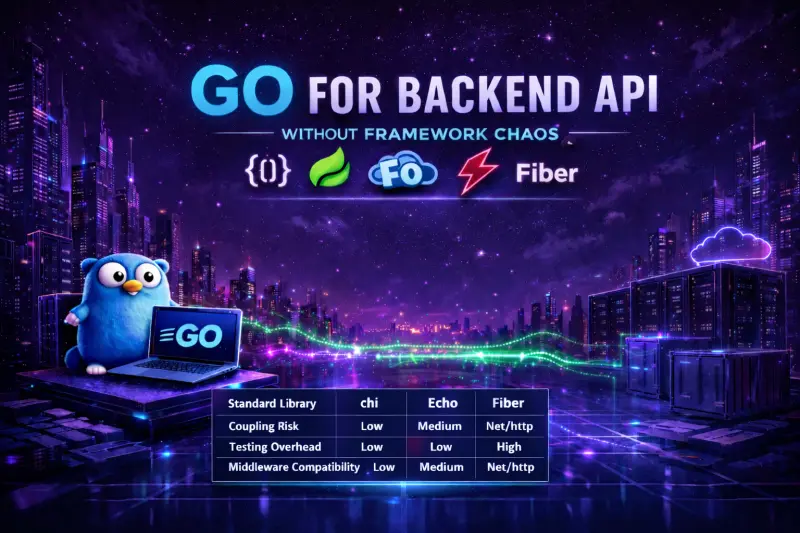
Writing HTTP APIs in Go Without Framework Chaos
A practical comparison of Go’s standard library, chi, echo, and fiber through the lens that matters after launch: how easy the API remains to test, debug, extend, and maintain one year later.
 DevCerts
Best practices, practical recommendations, and relevant updates on certification, exam preparation, public verification, and professional credibility for developers and IT teams.
Recent articles
Showing articles in Go.
A practical comparison of Go’s standard library, chi, echo, and fiber through the lens that matters after launch: how easy the API remains to test, debug, extend, and maintain one year later.

Laravel Octane improves performance by changing the request lifecycle, not by making inefficient code disappear. This article compares Octane with RoadRunner, Swoole, FrankenPHP, Node.js, and Go from a production engineering perspective.
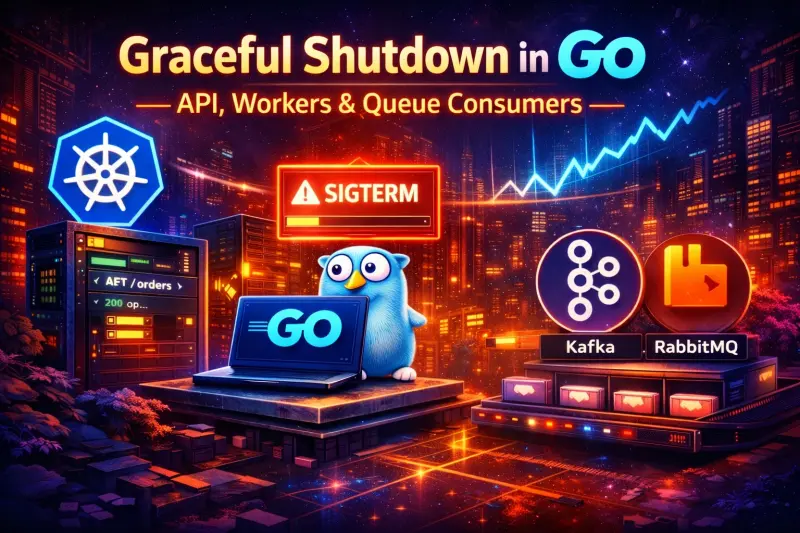
Graceful shutdown in Go is not just handling SIGTERM. In production, it is a lifecycle contract between your application, Kubernetes, load balancers, background workers, and message brokers.
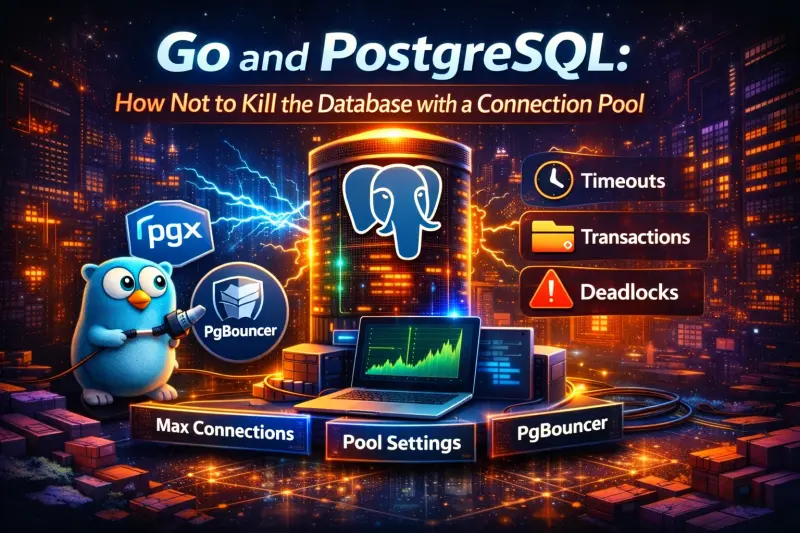
Connection pools protect latency only when they are sized against the database, not against application traffic. In Go services, `database/sql`, `pgx`, PgBouncer, timeouts, transactions, and deadlocks must be treated as one production system.
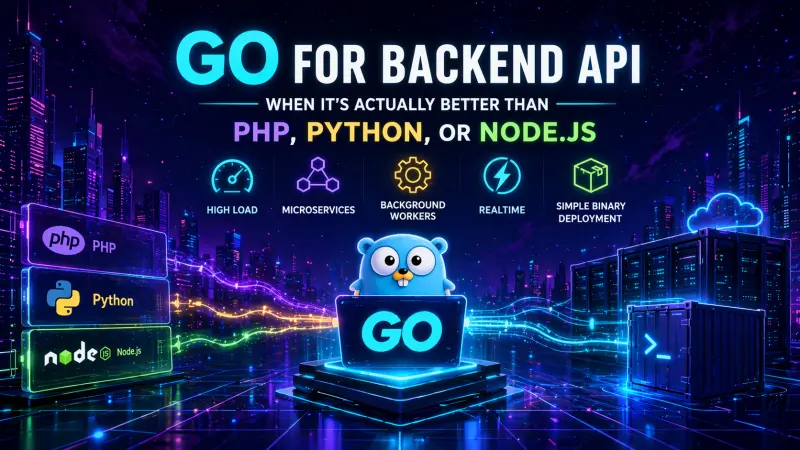
Go is not automatically the right backend language, but it becomes hard to ignore when runtime behavior, concurrency, deployment simplicity, and long-lived services matter more than framework speed or ecosystem familiarity.
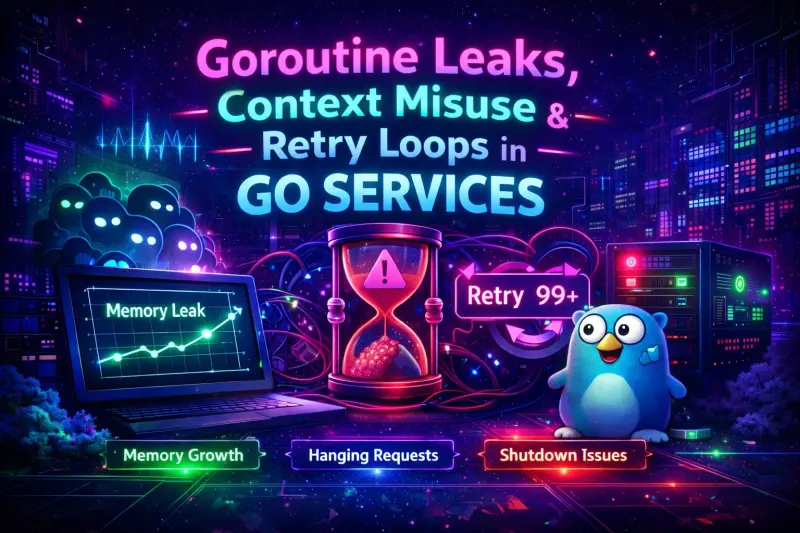
Go makes concurrency cheap, but not free. In production services, leaked goroutines, ignored contexts, and unbounded retries often show up as memory growth, hanging requests, noisy shutdowns, and incidents that are hard to reproduce locally.